
The benefits of sensory play for children
What is sensory play, why does it matter for early development, and how do you set it up at home? A guide for Australian parents.
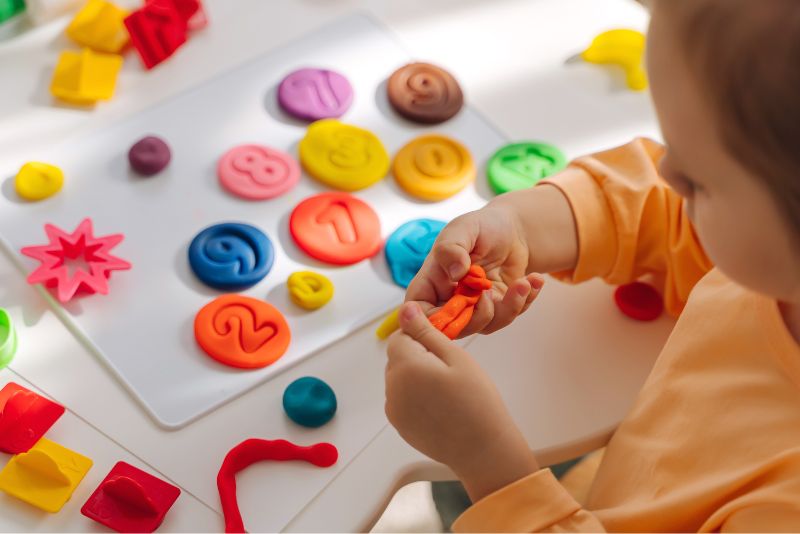
Children love to play, to touch, to see, to smell. Always interacting with the world around them, children use their senses to learn what that world has to offer.
Sensory play is a category of play that deliberately engages one or more of the senses. Every good early childhood centre uses it every day, and it's a big part of why centres look messy in a productive way.
What is sensory play?
Sensory play is any play that engages a child's senses. The classic five (sight, sound, touch, taste, smell) plus two more often forgotten: proprioception (where your body is in space) and vestibular sense (balance and movement).
Common sensory play activities include:
- Water play, ice play, bubbles
- Sandpit, kinetic sand, dry rice or pasta
- Mud kitchens
- Playdough and clay
- Slime and goop
- Music, sound shakers, listening walks
- Smell jars, taste tests, herb gardens
- Light tables and shadow play
- Climbing, swinging, jumping (vestibular and proprioceptive)
Why it matters
Sensory play helps young children:
- Develop fine motor skills. Squeezing dough, pouring water, picking up rice grains all build the same hand muscles needed later for writing.
- Build language. Sensory play gives children rich vocabulary to describe what they're experiencing (sticky, slippery, gritty, soft).
- Regulate emotions. Many sensory activities are calming. Children who are stressed often gravitate toward sand or water without being told.
- Make sense of categorisation. Sorting objects by texture or weight is foundational mathematical thinking.
- Develop hand-eye coordination. Pouring liquid into a smaller container is harder than it looks.
- Process sensory experiences. Some children need extra sensory input to feel calm; others need controlled exposure to manage sensitivities.
Setting it up at home
You don't need expensive equipment. A few suggestions for home sensory play:
- A baking tray with rice or dry pasta and a few small containers
- A washing-up tub of water with cups and pouring jugs (outside or in the bath)
- Homemade playdough (flour, salt, water, oil, food colouring)
- A “sensory bag”: ziplock bag with hair gel and a few beads, taped to a window
- A nature collection (leaves, sticks, pebbles, gum nuts)
The mess is the point, mostly. Set it up somewhere you don't mind, and let the play run for as long as your child's attention holds (often longer than you'd expect).
Sensory play in our centres
Sensory play is daily across all 4 Eikoh centres. Each centre has dedicated sand and water areas outdoors, plus rotating sensory tubs and tables indoors. Normanhurst has a particularly large mud kitchen. St Ives Chase uses natural materials extensively. Roseville and West Ryde both have substantial outdoor sand and water areas.
Talk to us
Each centre runs its own tours. Get in touch through the central form and we'll pass your message to the right director, or call our head office on 02 9487 5174.
Contact us