
Play-based learning: definition, examples and benefits
What play-based learning means, examples of what it looks like in a real room, the benefits, and how the EYLF practice of play-based learning and intentionality works.
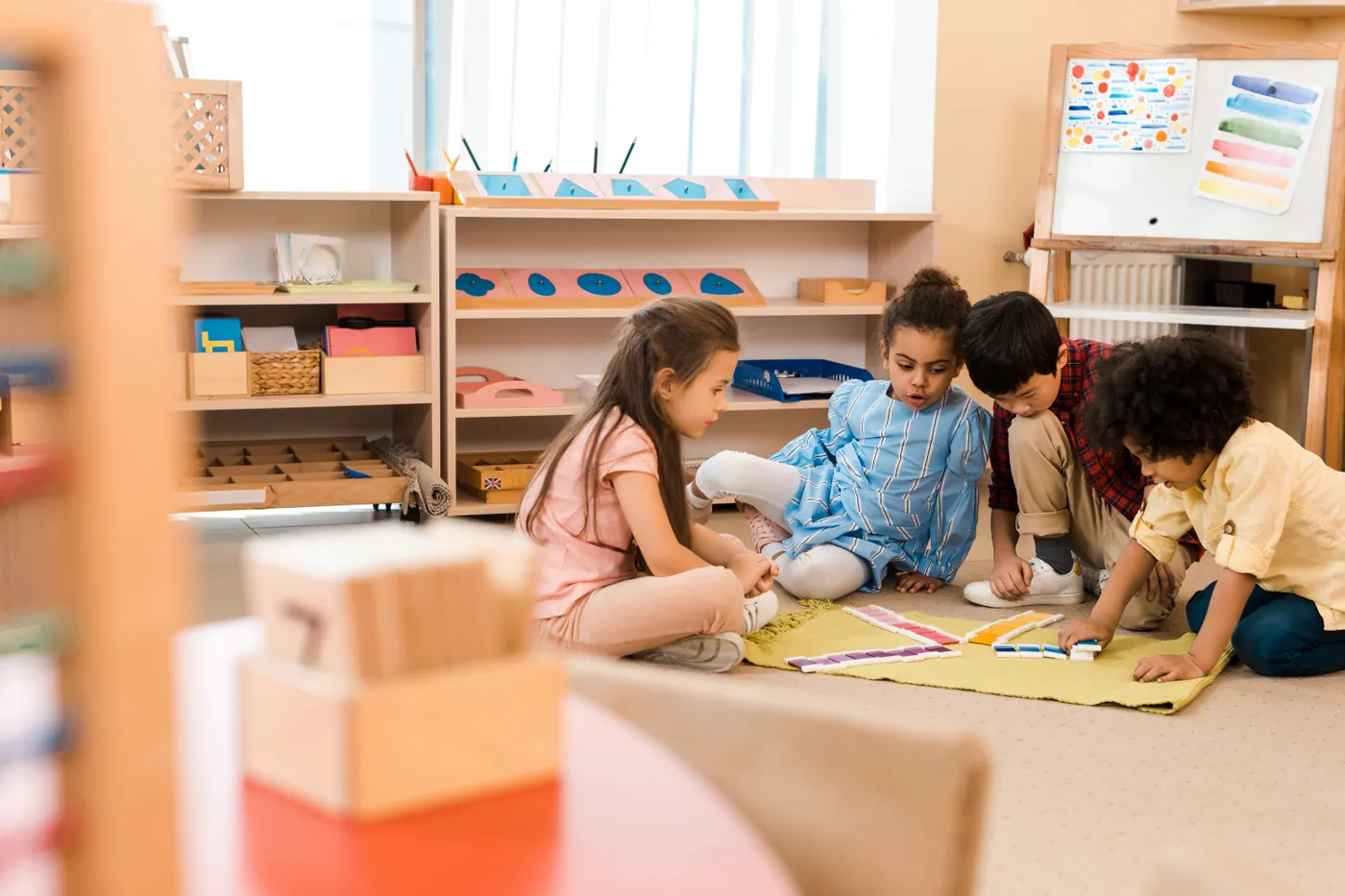
If you've looked at any early childhood centre in Australia, you've heard the phrase “play-based learning”. It's the foundation of how Australian early childhood education works, written into the Early Years Learning Framework.
But what does it actually mean? And why is play, of all things, the chosen vehicle for early childhood learning?
What is play-based learning?
Play-based learning is teaching that uses children's play as the primary mode of engagement. Children learn by doing, by experimenting, by making, by pretending, by building.
Australia's national framework puts it more formally. The Early Years Learning Framework describes play-based learning as "a context for learning through which children organise and make sense of their social worlds, as they engage actively with people, objects and representations". In other words: play is where young children do their thinking, and educators treat it as the main vehicle for learning rather than a break from it.
It is not the absence of teaching. Educators are present, observing, asking questions, giving just enough help at the right moment, and intentionally extending learning. They're also choosing what materials to put out, what conversations to have, and when to step back. The structure is in the educator's thinking, not in worksheets or whole-group lessons.
The benefits of play-based learning
Children at this age learn through the body, through the senses, through testing ideas in the physical world. They're not ready to sit still and listen for long. So formal lessons often do not stick, while play deeply embeds learning.
Play also lets children:
- Choose what to focus on (which means they actually focus)
- Repeat things until they master them, on their own timetable
- Make mistakes without consequences
- Practice social skills with peers
- Build the foundations of executive function (planning, switching, working memory)
The evidence for this is encouraging. Research suggests play-based programmes produce academic outcomes comparable to more formal approaches, alongside strong social-emotional outcomes.
Examples of play-based learning
A morning in a play-based room might include children:
- Building a town with blocks
- Mixing potions in the mud kitchen
- Reading books with an educator
- Working on a long-running ant project (see inquiry-based learning)
- Drawing, painting, doing pretend cooking in the home corner
- Sand and water play outside
- Music and movement
What you won't typically see: 25 children sitting at desks doing the same worksheet. The activities differ by age and by what each child is interested in, and educators move between groups asking questions, extending thinking, and noting what they're seeing.
Play-based learning is not unstructured
One common misconception is that play-based learning means children just do whatever they want. It doesn't.
Educators are deliberate about:
- The materials available each day
- The questions they ask
- How they document children's thinking
- How they extend a child's interest into deeper learning
- Group times for stories, music, and shared experiences
- Routine times for self-care, eating, resting
The intentional teaching happens within and around the play. The play itself is what the children experience.
Play-based learning and intentionality in the EYLF
In the EYLF V2.0, one of the seven practices is play-based learning and intentionality. The framework asks educators to be deliberate, purposeful and thoughtful in everything they do: what they set up, what they say, when they join a child's play and when they hold back. The NSW Department of Education's guidance on this practice makes the same point from the other direction: being intentional does not always mean stepping in. Often the most intentional thing an educator does is enhance children's play rather than interrupt it.
That practice sits alongside the framework's five learning outcomes, which describe what all of this play is building towards: identity, connection, wellbeing, confident learning and communication. We've also written more about intentional teaching, which is the educator's side of the same coin.
Play-based learning vs free play
Free play is child-led play with no particular agenda, and it has real value on its own. Play-based learning includes free play but goes further: educators plan environments and experiences with a clear purpose, watch what children's play reveals about their thinking, and extend it. The difference is not what the children are doing (it looks like play either way) but what the adults are doing around it. In a play-based program the educator has chosen the materials for a reason, is documenting what the play shows, and uses it to plan what comes next.
Play-based learning at our centres
All 4 Eikoh centres are play-based, with their own variations. St Ives Chase is most explicitly Reggio-inspired, with documented inquiry projects. Normanhurst uses Emergent Curriculum, where programmes start from each child's interests. Roseville blends play with structured preschool routines as children approach school age. West Ryde covers the full birth-to-school journey across 4 rooms.
Talk to us
Each centre runs its own tours. Get in touch through the central form and we'll pass your message to the right director, or call our head office on 02 9487 5174.
Contact us