
The benefits of water play for children
Why water play is a daily staple in quality early childhood centres, and what it teaches children. A guide for parents.
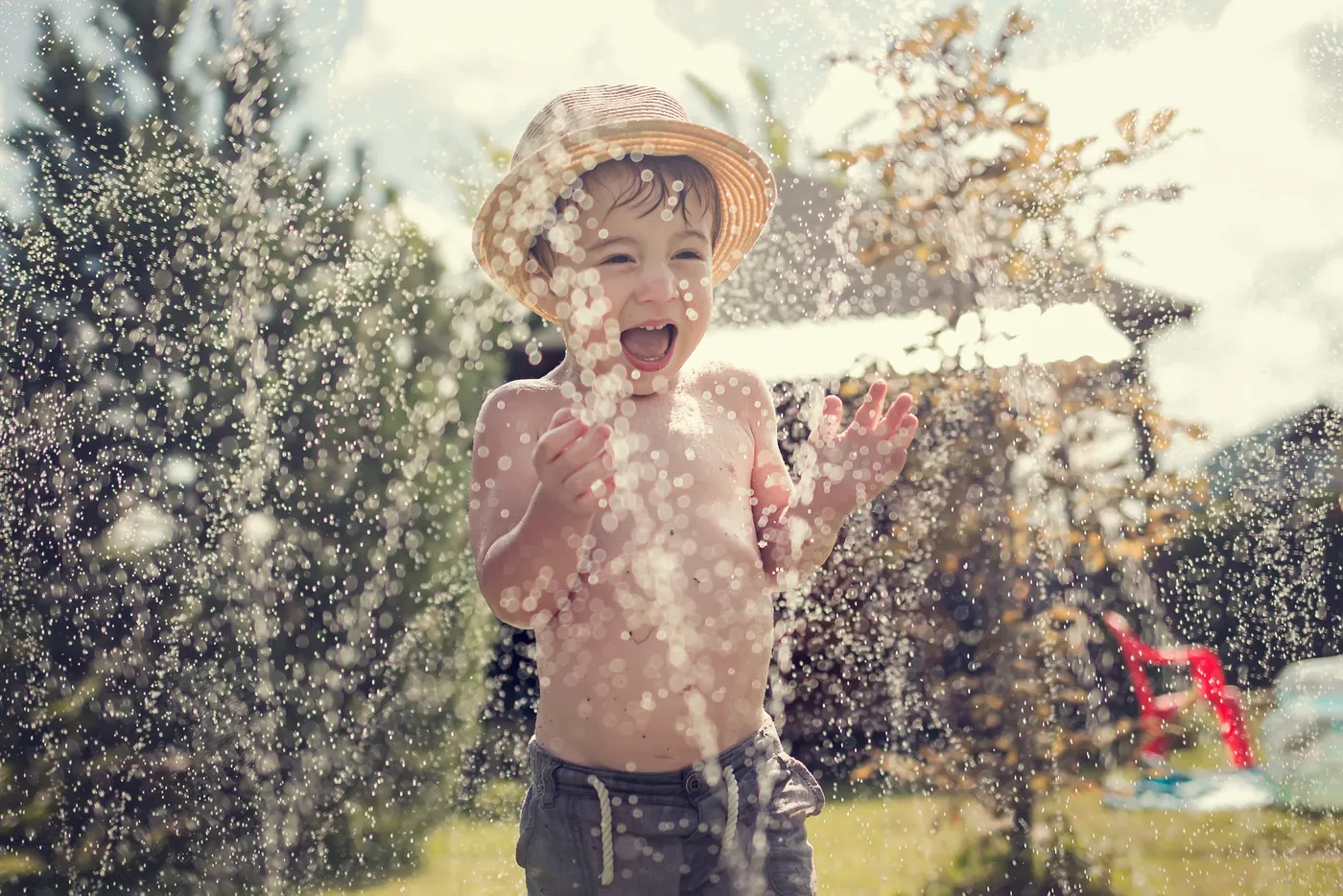
Water play is one of the most universal sensory experiences in early childhood. Children gravitate toward it from infancy, and it remains a favourite well into the preschool years.
It's also one of the most useful activities educators can offer. Water play sneaks an enormous amount of learning into what looks (and feels) like simple fun.
Why water play matters
Water has unique properties that make it rich for teaching and learning:
- It's endlessly transformable: pour, splash, freeze, drip, mix
- It responds immediately to what children do, giving instant feedback
- It works for many ages at once: a six-month-old can splash, a four-year-old can engineer
- It's naturally calming for many children
- It costs almost nothing
What it teaches
Cause and effect. Pour water into a wide bowl, it spreads. Pour it into a narrow tube, it goes up. The repeated experimentation teaches children fundamental relationships in physics.
Volume and conservation. Two glasses of different shapes can hold the same amount. This concept (Piaget called it conservation) is a foundation of mathematical thinking, and water play teaches it long before any formal maths.
Fine motor skills. Pouring, scooping, squeezing sponges, using droppers. All of it builds the small hand muscles needed for writing later.
Hand-eye coordination. Hitting the target when pouring is harder than it looks for a two-year-old. The skill builds up over months.
Language. Water creates an enormous vocabulary opportunity: drip, splash, pour, dribble, gush, stream, trickle.
Cooperation. Two children sharing a water tray inevitably negotiate space, tools, and turn-taking.
Self-regulation. Children often move to water play when they need to calm down. The repetitive, predictable response of water seems to settle the nervous system.
How educators set up water play
A water play setup is more than a tub of water. Quality water play offers:
- Containers of different sizes and shapes
- Pouring tools (jugs, watering cans, droppers, pipettes)
- Things that float and sink for testing
- Funnels, tubes, channels for moving water
- Sometimes additions like food colouring, ice, soap, or natural materials
The variety changes the challenge. A two-year-old with a single jug and a tub does basic exploration. A four-year-old with funnels, tubes, and timers can build genuine experiments.
Water play in our centres
Each of our 4 centres has water play available daily, weather permitting. Outdoor water tables, sprinklers and hoses for warmer days, and indoor water trays when it's wet outside. The setup changes regularly to keep the activity interesting.
For practical reasons (sun, weather, slips), we structure water play with appropriate supervision and clothing, and we always have a hat and sunscreen routine in place. Book a tour if you'd like to see how it's set up at any of our centres.
Talk to us
Each centre runs its own tours. Get in touch through the central form and we'll pass your message to the right director, or call our head office on 02 9487 5174.
Contact us