
School readiness: preparing the transition to school
What 'school ready' means in the Australian context, and how preschool programmes prepare children for the transition to primary school.
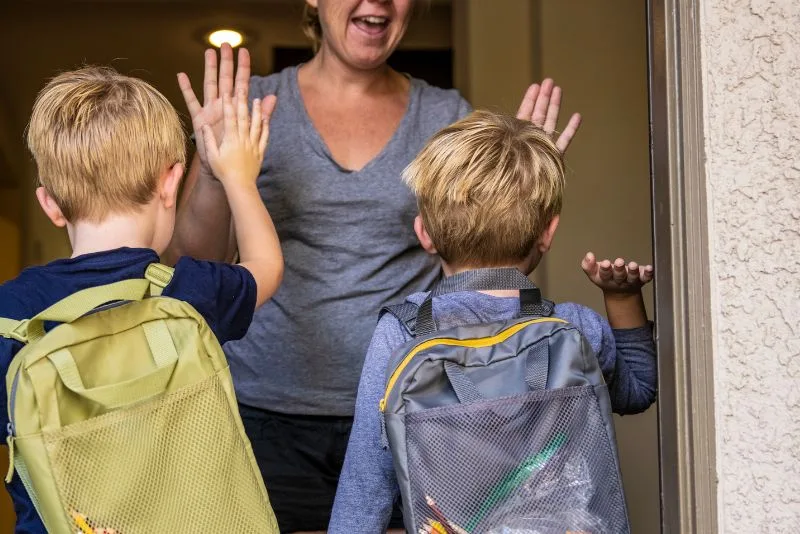
“School ready” gets used a lot, often without much agreement on what it means.
For some parents, it's about whether their child can write their name. For others, it's about social skills. For schools, it's usually a combination of self-care, attention, and the ability to be in a group.
This article explains what school readiness actually involves, and how the preschool programmes at our centres prepare children for the transition.
What school readiness actually means
The Australian Council for Educational Research describes school readiness as covering five connected areas:
- Physical health and motor skills. Holding a pencil, running, balancing, dressing, eating independently, going to the toilet.
- Social and emotional readiness. Separating from parents, joining a group, managing feelings, following routines.
- Approaches to learning. Curiosity, persistence, attention, willingness to try things.
- Language and communication. Listening, taking turns in conversation, expressing needs, telling a simple story.
- Cognition and general knowledge. Counting, recognising letters, understanding categories and patterns.
Notice that knowing letters and numbers is just one part of one domain. Schools find that children who are weak on the social-emotional and physical domains struggle more than children who don't yet read.
What we focus on in our preschool rooms
Across our 4 centres, the preschool-aged children spend their year doing many things, but the school-readiness focus is on:
- Self-care: managing their own bag, hat, water bottle, lunch box, toilet, hand washing
- Listening and following instructions: being able to focus on an adult speaking to a group
- Taking turns and working with others: in small groups, in games, in shared projects
- Sustained attention: being able to stay with a task for 10-15 minutes
- Asking for help: knowing when they need it and how to ask
- Managing emotions: recovering from disappointments, handling waiting, naming feelings
- Pre-literacy and numeracy: recognising their name, counting, identifying letters and sounds, recognising patterns
- Fine motor skills: pencil grip, scissors, drawing
- Story comprehension: listening to stories, retelling them, predicting what happens next
The point isn't to do school-style lessons. It's to build these capabilities through play and routine, so they're solid by the time school starts.
The transition to school
In NSW, children can start kindergarten (the first year of school) in February if they turn 5 on or before 31 July that year, and must be enrolled in school by their sixth birthday. Schools and preschools work together to support the transition. We help families with:
- Practical advice on the school enrolment process
- Transition statements (a written summary of your child's strengths and any support needs, shared with the school with your consent)
- End-of-year orientation visits where possible
- Conversations with families about how things are going
Two things parents can do at home
The two most useful things parents can do for school readiness:
1. Read to your child every day. Books, signs, packets, anything. Daily reading builds vocabulary, comprehension, attention, and the simple love of stories. The research on the impact of regular reading is strong and consistent.
2. Let them do their own self-care. Resist the temptation to dress them, pour their water, tidy up their toys. The skills build slowly, and they add up. By age four, a child who's been allowed to do their own coat zips for two years can manage their own bag, coat and belongings without support.
Where this happens at Eikoh
The school-readiness focus is most explicit at Roseville Kindergarten, where the whole programme is built around the year before school. The preschool rooms at Normanhurst, St Ives Chase, and West Ryde also run dedicated preschool programmes for the four-five age group.
If you're thinking about your child's last year before school, book a tour at one of our centres to talk it through.
Talk to us
Each centre runs its own tours. Get in touch through the central form and we'll pass your message to the right director, or call our head office on 02 9487 5174.
Contact us