
Preparing your child for the first day of daycare
A practical checklist for the lead-up week and the first morning at daycare. From bag packing to settling visits to managing your own emotions.
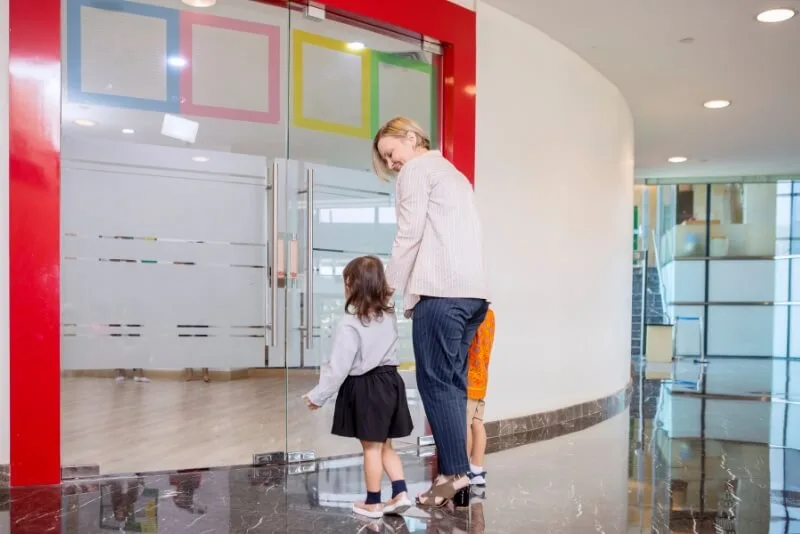
One of the most common things we hear from new families is that the first day of daycare was harder for the parent than the child.
That doesn't make it easy though. The first day involves real adjustment for everyone, and the right preparation in the days before can make a meaningful difference.
This is a practical guide for the week before, the morning of, and what to expect afterwards.
The week before
Visit the centre together. Most centres offer settling visits in the days before a child officially starts. Bring your child for a 30-minute play in their new room, where you stay with them. The room becomes less unfamiliar.
Talk about it. In simple, positive language. “On Monday, you're going to play at your new school. Mummy/Daddy/Mama will drop you off, and you'll have lunch and stories there, then I'll pick you up after afternoon tea.”
Read books about starting daycare. There are many good ones. Reading stories about characters going to daycare helps daycare feel normal.
Practise the morning routine. If your morning is going to look different (waking earlier, getting dressed faster, eating breakfast at a different time), do a couple of practice runs.
Pack the bag together. Let your child help pack their bag the night before. Knowing what's coming with them helps.
What to pack
Most centres give you a list, but typically:
- A spare set of clothes (often two, with babies and younger toddlers)
- A water bottle (labelled)
- A wide-brimmed hat (some centres supply one that lives at the centre)
- Sunscreen (usually supplied by the centre, but some families bring their own)
- Nappies and wipes for under-3s (most centres include nappies in the fee, but check)
- A comfort item (a small toy or soft blanket, if your child has one)
- A photo of the family for the room (some centres ask for this)
Label everything. Permanent marker on a tag, on the inside of clothing, on the bottom of bottles.
The first morning
Don't rush the morning. Build in extra time. A calm, slow morning sets a much better tone than a rushed one.
Eat a real breakfast. Some centres serve breakfast or morning tea; at others, families pack their own. Either way, a child who arrives well-fed settles more easily.
At drop-off: keep it short and warm. A long, drawn-out goodbye is harder for everyone. Hug your child, tell them when you'll be back (in concrete terms: “after lunch and after sleep time”), hand them to an educator, leave. Yes, even if they're crying.
Don't sneak away. A goodbye, even a brief one, is more honest. A child who turns around to find you gone learns to mistrust the situation.
Stay close to your phone. The centre will call if anything is wrong. Most centres also send a couple of photos through the day on the parent app, which helps.
After the first day
Some children settle in a few days. Some take weeks. Both are normal. Children who cried hard at drop-off often have lovely days once they're absorbed in the activities. The educators will tell you honestly how the day went.
Expect some steps backwards for a while. Tiredness, sleep changes, occasional tantrums in the first few weeks are all common and pass.
Talk to the educators. A short conversation at pickup, a few times in the first weeks, helps you and the educators understand each other. Tell them what your child likes, dislikes, what works at home, what doesn't.
Settling at our centres
Each of our 4 centres has a settling-in process built around the family's needs. Normanhurst, St Ives Chase, Roseville, and West Ryde all offer settling visits and a gradual start where possible.
Contact us if you'd like to talk through what the start might look like for your child.
Talk to us
Each centre runs its own tours. Get in touch through the central form and we'll pass your message to the right director, or call our head office on 02 9487 5174.
Contact us