
The benefits of childcare and early learning
What the evidence shows about how quality childcare and early learning affect children's development, social skills, and school readiness.
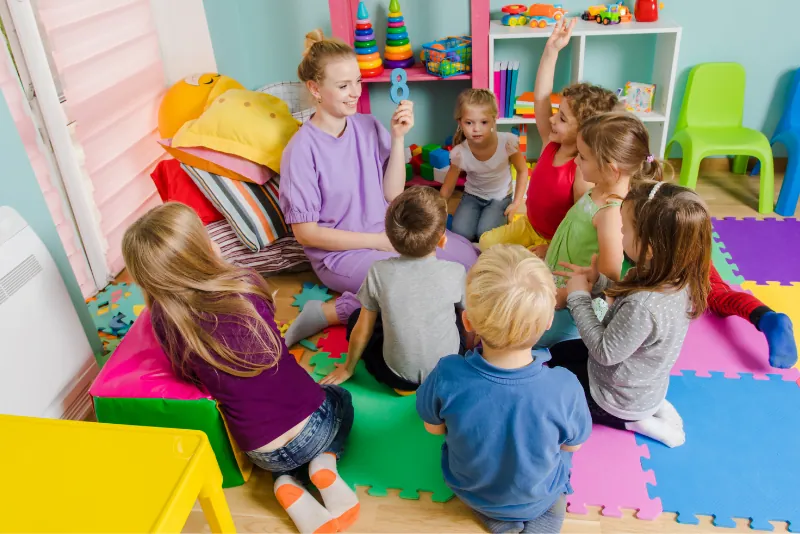
For most Australian families, childcare is a practical necessity. But it's also more than that. Decades of research show that quality early childhood education affects how children develop socially, emotionally, and cognitively, in ways that follow them into school and beyond.
This article summarises what the evidence shows about the benefits of childcare and early learning, and what to look for when choosing a centre.
Social and emotional development
One of the strongest findings in early childhood research is that children in quality care environments have rich opportunities to develop social and emotional skills.
This includes:
- Building friendships and understanding how other children feel
- Negotiating, sharing, and taking turns
- Recovering from disagreements
- Recognising and naming their own feelings
- Recognising and responding to others' feelings
Research links participation in quality early childhood programmes with stronger social-emotional skills at school entry.
Language and cognitive development
Quality childcare environments are rich in language, exposing children to a wide range of vocabulary. Educators are deliberate about how they talk to children, the questions they ask, the books they read, and the conversations they sustain.
The cognitive benefits show up in:
- Vocabulary size at school entry
- Early literacy and numeracy
- Problem-solving and inquiry skills
- Working memory and attention
The Effective Provision of Pre-school Education (EPPE) study, a long-term UK study, showed that high-quality preschool experience predicted higher academic outcomes through to age 14.
School readiness
Children who've been in quality early childhood education arrive at school knowing how to be in a group of children, how to follow a routine, how to listen to an adult who isn't their parent, and how to ask for help.
These “executive function” skills (the ability to manage attention, regulate behaviour, and work with others) often matter more for school success than knowing letters and numbers. Quality early childhood care builds them.
Why quality matters most
The research is consistent on something important: it's the quality of care that matters, not just attendance. Quality matters: high-quality childcare is associated with meaningful positive effects for children.
Things to look for:
- Stable, qualified educators. Look for low staff turnover and educators with early childhood qualifications.
- Low ratios. The legal minimum is the lowest allowed. Centres staffed above the minimum are usually better.
- National Quality Standard (NQS) rating. Look for “Meeting” or “Exceeding” ratings.
- A real philosophy. A centre that can explain clearly how they teach, not just what activities they run.
- Warm, responsive interactions. When you tour, watch how educators talk to children. Tone matters more than activities.
Quality at our centres
All four Eikoh centres are rated Meeting the National Quality Standard. We invest in continuous professional development for educators across all 4 centres.
If you'd like to see what quality looks like in person, book a tour.
Talk to us
Each centre runs its own tours. Get in touch through the central form and we'll pass your message to the right director, or call our head office on 02 9487 5174.
Contact us